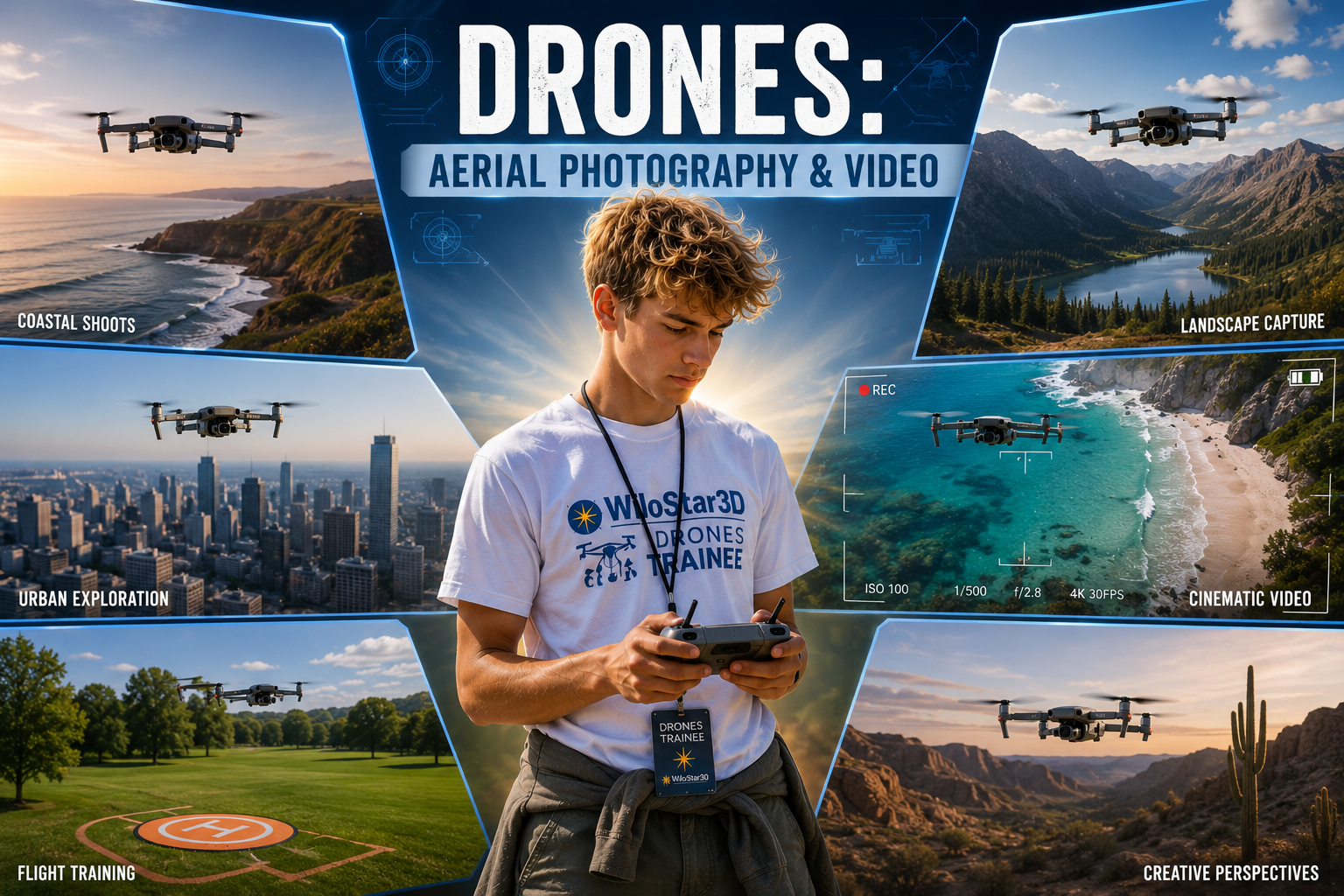
WiloStar3D Academy
249GWeight Class
4K HDRResolution
14Lessons
PART 107Instructor
ENROLLING NOW
Fourteen weeks. One licensed commercial pilot. A Holy Stone HS175D. Real regulations, real camera technique, and a finished aerial film you made yourself.
By the end of this course, students will hold an FAA TRUST safety certification, understand how the national airspace system works, know how to read airspace maps and file LAANC authorizations, operate a camera drone in manual exposure mode, execute cinematic flight techniques, and deliver a finished, edited aerial film. That is a real skill set with a real commercial market.
The course is built around one instructor: Travis Hale, a licensed Part 107 commercial drone pilot who is actively building his aerial photography business. He is not teaching from a textbook. He is teaching from a flight line.
Travis Hale
Part 107 Commercial Pilot · InstructorTravis Hale is a licensed FAA Part 107 commercial drone pilot and the founder of his own aerial photography and video business. He has been flying drones for years — recreationally, creatively, and now commercially. He went through the Part 107 certification process and built a business around it.
He is not a professor. He is not reading from a curriculum someone else wrote. Every demo video in this course was filmed by Travis on his actual Holy Stone HS175D at real locations, showing real technique, and sharing what he actually learned — including what went wrong and what he would do differently.
The course was designed around his experience because that is what makes it different: you are not learning drone photography from a classroom. You are learning it from someone who is actively doing it.
FAA Part 107 Remote Pilot Certificate — commercial drone operations
Aerial Photography & Video Business — active commercial work
Holy Stone HS175D Operator — the drone students use in this course
WiloStar3D Academy Instructor — teaches the full 14-lesson course
Each lesson follows the same structure so students always know where they are and what comes next. The educational context comes first, then the demonstration, then Travis’s real perspective, then the student goes outside and does it.
An educational YouTube video providing context — regulations, technology, industry applications, or technique — with structured observation questions.
Travis’s own pre-recorded video demonstrating the lesson’s skill on his actual Holy Stone HS175D. His hands, his drone, his locations, narrated in real time.
Travis’s written perspective on the lesson topic — honest, specific, and based on his own experience.
Students take their drone outside and do the thing. Footage, photos, written observation notes, or research submitted through the platform.
A WiloBot prompt at the end of every lesson asking students to connect what they learned to their own flying, thinking, or future goals.
Each lesson is worth 100 points, graded manually by the instructor based on effort, completeness, and the quality of submitted footage or written work.
14-Lesson Schedule — Wednesdays
Unboxing · Kit tour · DJI Fly app · Remote ID · Why drones matter
TRUST test · Part 107 vs recreational · Registration · Remote ID compliance
Full pre-flight sequence · RTH altitude · Obstacle avoidance · Airspace check
RC2 controller tour · DJI Fly app settings · Flight modes · IMU and GPS
First flight technique · Stable hover · Orientation · Controlled landing
Cardinal directions · Yaw · Figure-8 · Square pattern · Calibration drill
Airspace classes · LAANC authorization · TFRs · Location scouting
Exposure triangle · 180-degree shutter rule · ND filters · Manual exposure
Rule of thirds · Leading lines · Nadir shot · Golden hour · Compositional intent
Dronie · Fly-through · Tracking · Push-in reveal · The mental storyboard
All 6 QuickShots · ActiveTrack · MasterShots · When to use automation vs manual
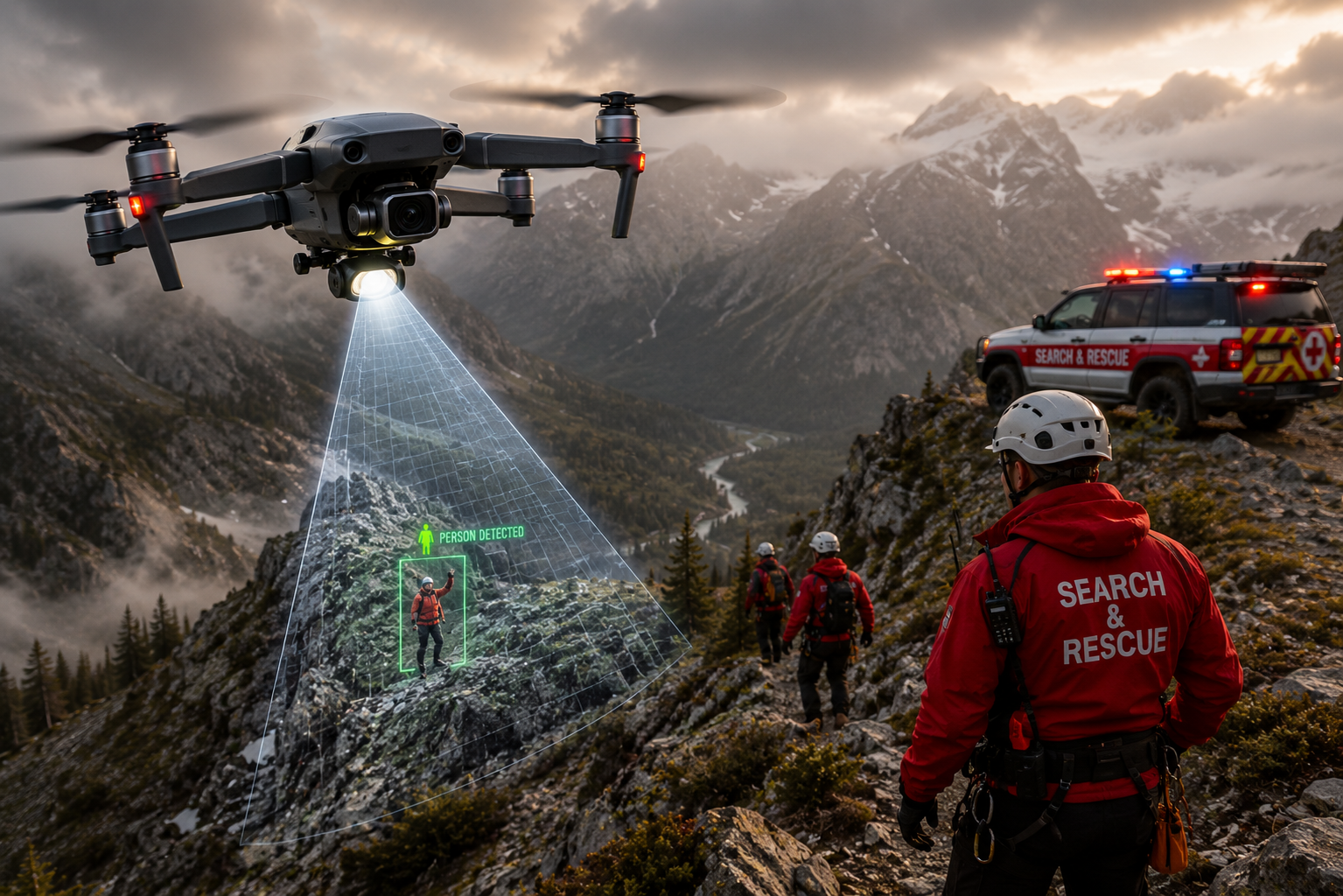
Real estate · Film · Conservation · SAR · Commercial workflow · Client contracts
DaVinci Resolve · File organization · Color grading · Music · Export for delivery
90-second minimum film · Five shot types · Color graded · Scored · Director’s Note
Every lesson has a concrete output. Students submit footage, photos, research, or written observation notes in every session. By December, each student has a documented progression from Day 1 to a finished cinematic film.
Students complete the official FAA Recreational UAS Safety Test in Lesson 2 and hold a legal certification for outdoor drone flight for the rest of the course and beyond.
Footage clips, aerial photographs, settings screenshots, airspace checks, and research documents submitted through WiloStarius across every lesson of the semester.
A minimum 90-second edited aerial film: five shot types, manual exposure, color grading, licensed music, and a written Director’s Note. A real deliverable with a real standard.
Travis teaches on the Holy Stone HS175D and students follow along with the same model. Every setting walkthrough, every demo video, every field assignment is built around this specific drone — so there is no translation required between what Travis shows and what students do.
The HS175D is a GPS-equipped foldable drone built for serious learning without the serious price tag. Under 249 grams means recreational pilots have fewer regulatory hurdles, and its 46-minute flight time gives students more time in the air on every session. It is Travis’s own course aircraft.
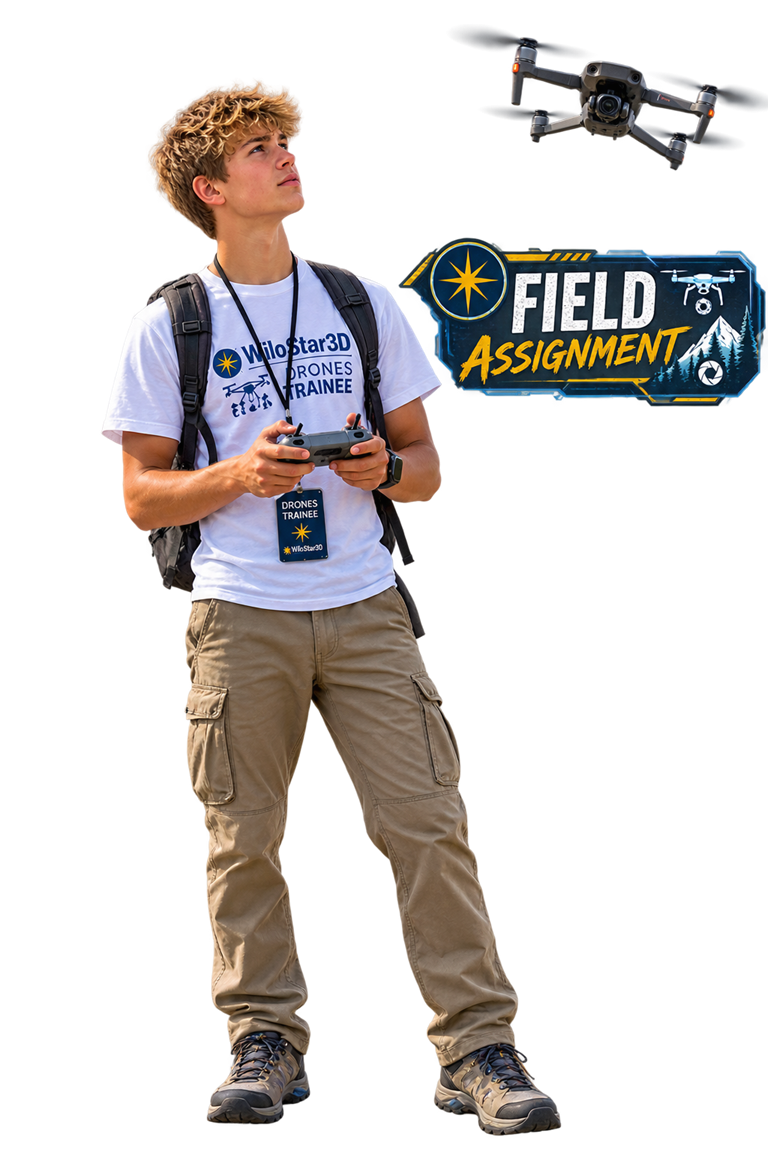
This is not a passive course. Every lesson ends with a field assignment that takes students outside with their drone. From first takeoffs to cinematic sequences, the progression is documented in real footage.

Field assignments are designed to work in backyards, parks, open fields, or anywhere a student can fly legally. Students check airspace before every flight — that is part of the assignment.

Every field assignment is a piece of the final project. Footage from early lessons becomes the raw material for the edited film submitted in Lesson 14.
Drones: Aerial Photography & Video runs fourteen Wednesdays, September through December 2026. Taught by Travis Hale with full teacher support through the WiloStar dashboard.
Questions? 877-723-7765